
Introduction
Google launched a huge search update in August 2026. This update impacts millions of sites around the world. A number of site owners noticed their organic traffic plummeted instantly. Other web sites rose to the top in just a few days.
Don’t panic if you have fallen in the rankings. Search engines are changing rapidly. Google’s goal is to remove poor quality search results. They would like to display pages which are helpful and have been created by genuine experts.
The same old optimization techniques aren’t enough anymore. No matter what keywords you add to your post, if you don’t write it in a logical way, you will not get high ranking. Today, optimization is necessary for three main areas:
- SEO (Search Engine Optimization)
- AEO (Answer Engine Optimization)
- GEO (Generative Engine Optimization)
This complete article outlines all the changes in the Google SEO New Update August 2026. You’ll discover how to develop genuine connections with readers and search engines. You will also get a step-by-step plan to rank your website at the top.
What Is the Google SEO New Update August 2026?
Google SEO New Update August 2026 is a significant update to Google’s main algorithm. Google’s update is to assess content quality, author trust and search intent.
Historically, updates have been aimed at bad links or slow page speeds. This is a main update that prioritizes content depth, original proof and clear answers.
| What Google August 2026 Update Rewards | What Google August 2026 Update Demotes |
| Firsthand photos, real tests, and personal experience | Articles created by rephrasing other top search results |
| Clear author bios with proven work history | Faceless blogs with anonymous authors |
| Direct answers that work well for AI search tools | Wordy articles stuffed with repetitive keywords |
| Fast loading speeds and easy mobile navigation | Slow sites covered in heavy pop-up ads |
Main Changes in the August 2026 Update
1. Penalties for Generic AI Summaries
Google down-grades web pages that merely regurgitate the top results. The lower value of an article is because it does not give any new ideas, unique facts, or fresh data.
2. Higher Value on Hands-On Experience
Google looks for genuine human interaction. The generic guides, written anonymously by authors, went out of the way. Google wants you to have tried what you write about.
3. Strict Intent Alignment
Pages which attempted to address too many topics at once fell down. Well-targeted pages that address a single topic in an informative and detailed manner can benefit Google.
4. Compatibility with AI Search Engines
This update prioritizes content that can be easily consumed by AI models. This includes Google AI Overviews, ChatGPT, Gemini, and Perplexity.
5. Brand and Entity Signals
Google searches the Web for brand names. Incorporating real authors and links and citing verified credentials helps to increase site authority.
Understanding the Core Triad: SEO, AEO, and GEO
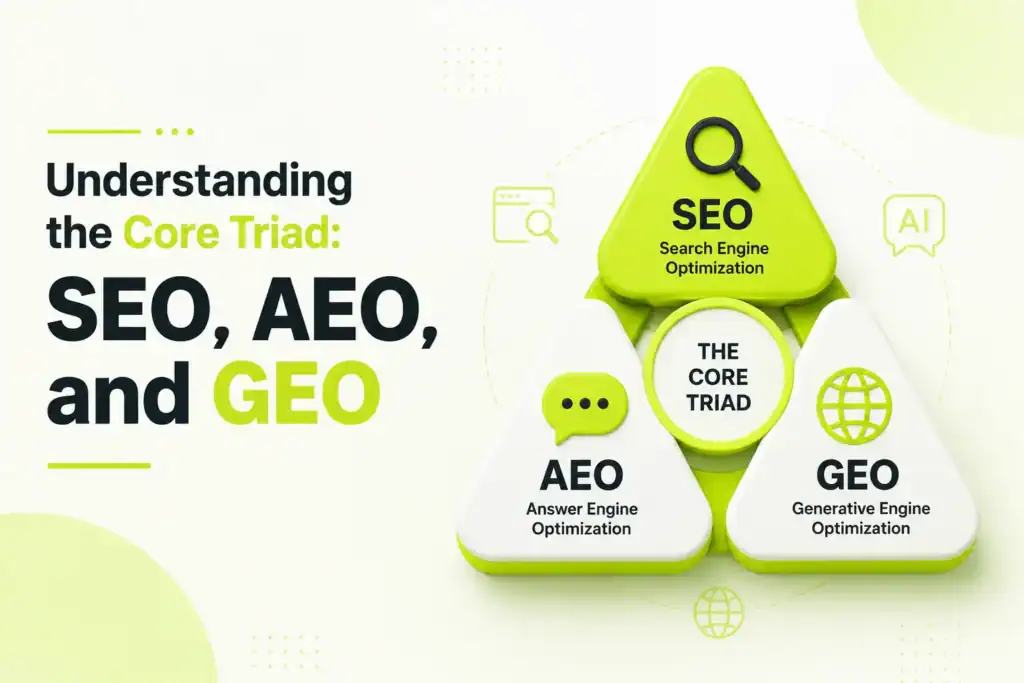
In order to achieve high ranking in 2026, it’s important to understand the dynamics of search systems working together.
1. Traditional SEO (Search Engine Optimization)
SEO improves your ranking in the standard web search results. It depends on page speed, mobile setup, quality links, clean code and targeted keywords.
2. AEO (Answer Engine Optimization)
AEO formats your text for easy extract of the short facts. AEO is used with devices such as smart speakers, Siri and Google Snippets to provide the user with immediate verbal or textual answers.
3. GEO (Generative Engine Optimization)
By facilitating citations within generative AI-generated responses, GEO aids your site in being referenced on the answers. ChatGPT, Google Gemini, and Perplexity are just a few platforms that leverage GEO principles to select reliable information.
How Search Engines Process Content in 2026
Advanced AI models are used to read web pages by modern search engines. They’re not simply matching words, but they’re matching words for content. They consider the meaning, facts and structure.
Traditional Search Engine Processing
- A user types words into a search box.
- The search engine looks into its vast database for the pages that have the exact same words.
- It ranks pages according to links and keywords, as well as domain age.
Modern AI Engine Processing
- A user poses a challenging question.
- A.I. is able to read in real time thousands of pages.
- It is able to locate facts, data, and direct quotes from reliable sources.
- It gathers these facts and provides an unambiguous conclusion followed by links to the original sources.
If you offer accurate information, concise responses, and verified data, AI models will reference your link.
Mastering E-E-A-T in 2026
The acronym E-E-A-T is an acronym for Experience, Expertise, Authoritativeness, and Trustworthiness. Trustworthiness is the basis of all high-ranking sites in Google SEO New Update August 2026.
1. Experience
Demonstrates that a product or process was actually used.
- Do this: Include photos, screenshots, short videos and personal case studies.
- Avoid this: Avoid using stock photos or product summaries, or copying images.
2. Expertise
Demonstrate extensive expertise in your area.
- Do this: Develop compelling author bio blocks. Link to active professional profiles and published work.
- Avoid this: Avoid posting with anonymous or fake names such as “Admin” or “Not My Name.
3. Authoritativeness
Make your site a leader in the market.
- Do this: Make news picks on the news site, do surveys and get links from the top blogs in the industry.
- Avoid this: Avoid low quality links from low-cost link networks.
4. Trustworthiness
Maintain a secure, reliable, and current site.
- Do this: Refer to primary sources, have clear contact pages and refresh old posts on an annual basis.
- Avoid this: Never serve broken links, false claims or missing security certificates..
How to Humanize Your Content for Better Rankings
Posts that read like a robot or a repeating statement will be devalued by Google. Google is not completely prohibiting the use of AI tools. But as for less quality texts that repeat regular web content, it imposes a penalty.
Simple Steps to Humanize Your Writing
- Use Simple Words: Write like you speak in a calm, clear voice.
- Keep Sentences Short: Limit sentences to 10–15 words whenever possible.
- Share Personal Stories: Use phrases like “When I tested this tool…” or “Our team noticed…”
- Vary Sentence Starts: Do not start every sentence with the same word.
- Cut Overused Filler Words: Avoid words like delve, leverage, tapestry, revolutionary, unlock, dynamic, and game-changer.
Step-by-Step Action Plan to Rank Your Website in 2026
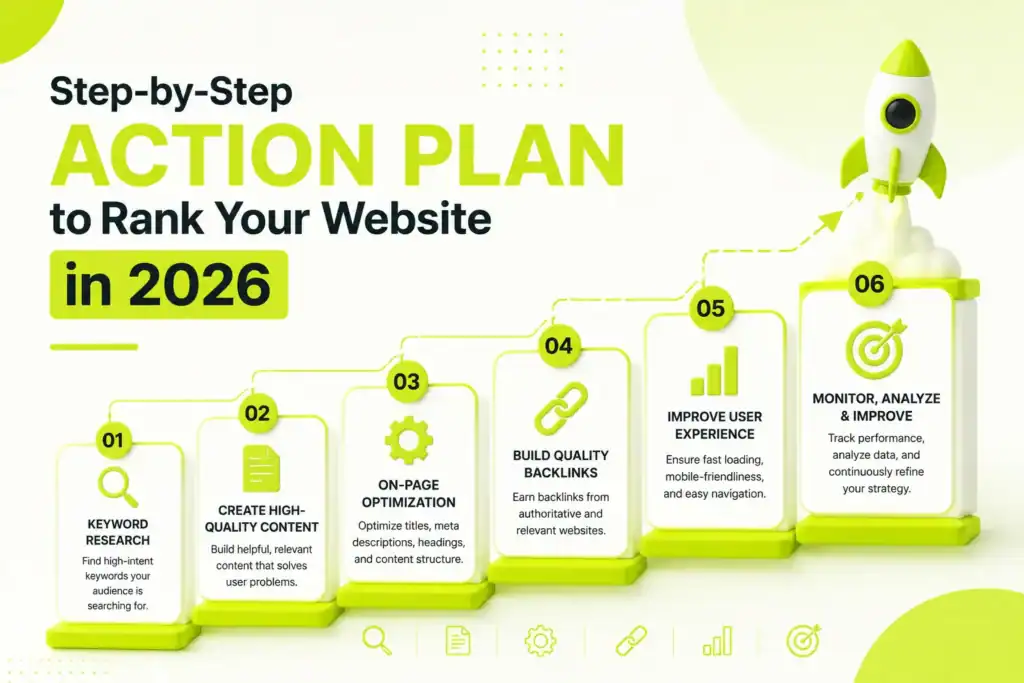
To boost your site’s visibility and secure your traffic from future changes, follow this easy plan.
Step 1: Perform a Content Audit
Access Google Search Console. Check your traffic in the last 30 days.
- Identify Dropping Pages: Search for posts that failed to get clicks or impressions.
- Remove Thin Pages: Remove posts that are not getting traffic and are not helpful to users that have low value.
- Combine Similar Posts:Combine 3 or 4 short posts on the same topic in one complete guide.
Step 2: Add Firsthand Proof and Media
Replace images on the most important pages.
- Take Real Screenshots: Take pictures of your work, step by step.
- Include Data Tables: Convert thick paragraphs to neat, readable tables.
- Insert Expert Quotes:Get a small comment from a colleague or industry expert and quote them.
Step 3: Format Content for Answer Engines (AEO)
Make your headings in a question rather than as statements so they can relate to the user’s question.
- Use questions with the “What Is…” or “How Do You…” format.
- Give a direct 2-3 sentence answer directly beneath the heading.
- Summarise and use bullet points or numbered lists to explain complex steps.
- Include FAQ Schema Markup on your webpage.
Step 4: Optimize for Generative AI (GEO)
Allow easy scanning and quoting for AI engines.
- Present unqualified facts in straightforward (simple) sentence structures.
- Use bold text for clear statistics, years and numbers.
- Compare features, prices, and specs using HTML tables.
Step 5: Fix Technical SEO and Site Speed
Technical foundations ensure accessibility of your content.
- Improve Page Speed: Have loading times of 2 seconds or less on mobile devices.
- Fix Layout Shifts:Make sure that the elements on the page don’t slide around when images are loaded.
- Clean Up Links: Resolve all broken internal links and update old external sources.
On-Page SEO Checklist for 2026
Use this simple checklist before publishing any new blog post or updating old pages:
- [ ] Is the primary keyword in the main page title?
- [ ] Is the page title under 60 characters?
- [ ] Does the first paragraph give a clear answer to the user query?
- [ ] Are all sentences short and easy to read?
- [ ] Did you include original photos or custom screenshots?
- [ ] Is there an author bio with links to verified profiles?
- [ ] Are key terms bolded for easy scanning?
- [ ] Is there a structured data markup (Schema) on the page?
- [ ] Does the page load fast on mobile phones?
- [ ] Did you link to 3–5 helpful internal pages on your site?
Technical SEO Requirements for 2026
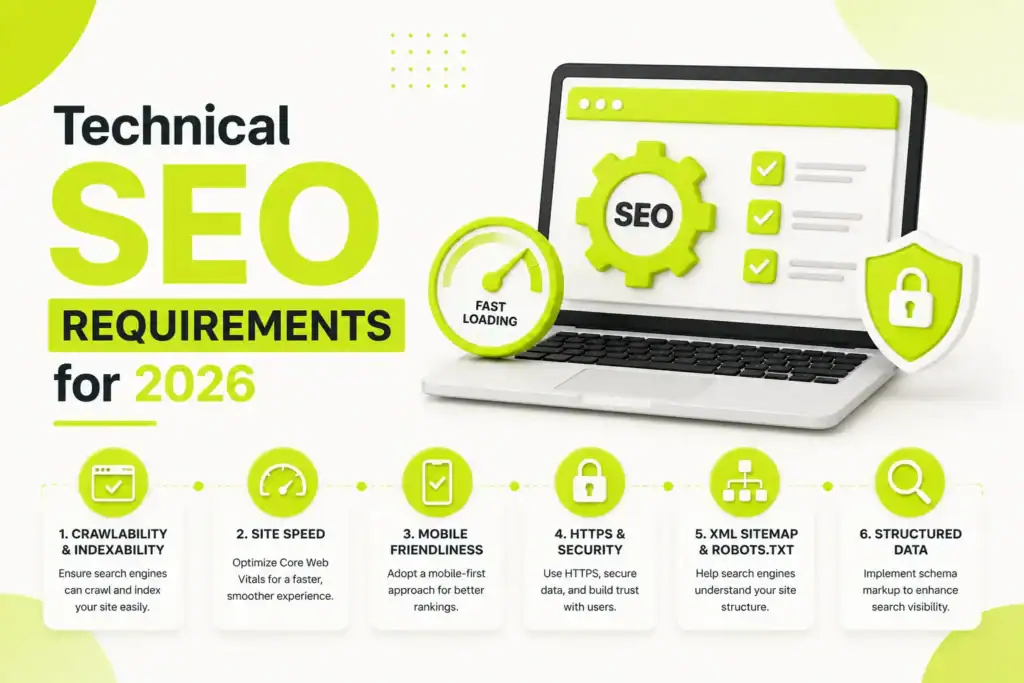
Technical factors make it easy for search engines to discover, crawl, and index your content.
Core Web Vitals Standards
- Largest Contentful Paint (LCP): Under 2.5 seconds.
- Interaction to Next Paint (INP): Under 200 milliseconds.
- Cumulative Layout Shift (CLS): Score under 0.1.
Mobile Usability
73% of all web searches take place on mobile devices. Your website should have legible fonts, appropriate spacing between buttons and responsive design.
Structured Data (Schema Markup)
Schema code enables search engines to see your content at a glance. Some of the most crucial schema types are:
- Article Schema: For standard news and blog posts.
- FAQ Page Schema: For question-and-answer sections.
- Person/Author Schema: To prove author identity and background.
- Product Schema: For product reviews, specs, and price comparison pages.
Content Comparison: Old SEO vs. 2026 SEO
Understanding how search strategies have changed over time helps you avoid outdated habits.
| Feature | Old SEO Approach (2020–2024) | Modern SEO Approach (August 2026) |
| Content Length | Long, fluffy posts filled with repeated keywords | Direct, factual guides built for quick reading |
| Keyword Usage | High keyword density and exact match phrases | Natural topic coverage and intent matching |
| Author Data | Generic names like “Admin” or no author box | Named experts with verified external profiles |
| Images | Stock graphics downloaded from free sites | Original custom screenshots, photos, and diagrams |
| Focus Area | Single search engine rankings | SEO, AEO, and GEO multi-platform visibility |
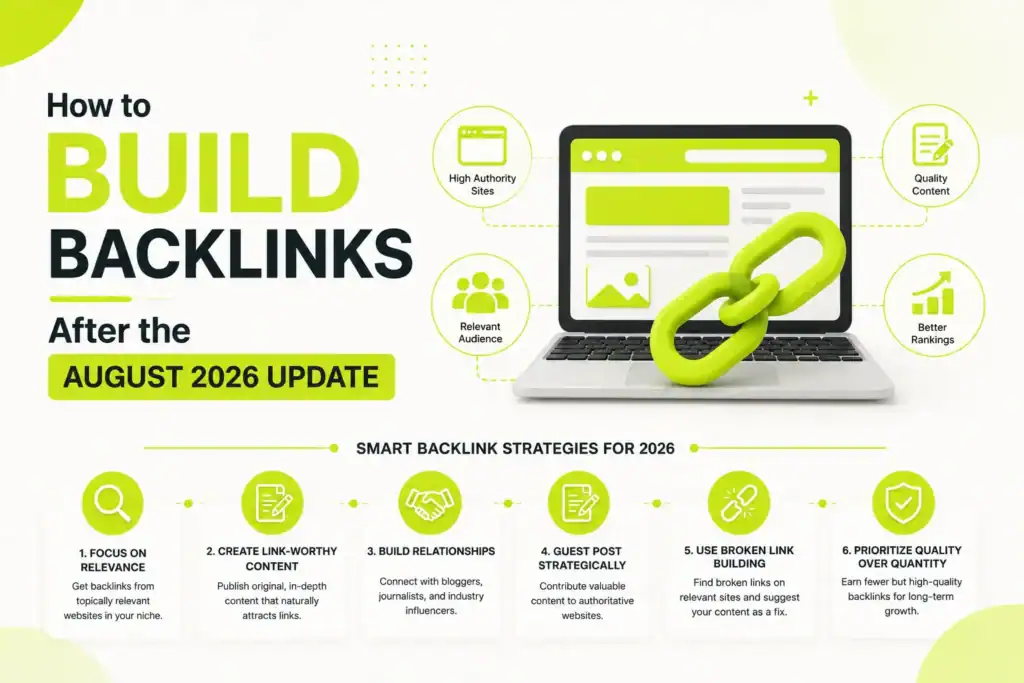
How to Build Backlinks After the August 2026 Update
Although it is still a factor in ranking, low-quality links can negatively impact rankings.
Effective Link Strategies for 2026
1. Publish Original Surveys and Data Reports
Look for special information in your field. Report results using clear charts. Your page will be linked to by other blogs as their main source.
2. Create Helpful Calculators and Free Tools
Naturally, there are simple online tools, budget calculators and templates that draw backlinks from resource pages.
3. Focus on Digital PR and Media Mentions
Contact reporters and podcasts. Authoritative brand mentions come from shared interviews and news quotes.
4. Guest Posting on Niche-Relevant Sites
Create quality, niche specific guest posts for active websites. Don’t use all-encompassing guest blogging schemes.
Measuring Success: Key SEO Metrics in 2026
When it comes to optimization, tracking just the right metrics will enable you to know if it is going well or not.
- Organic Impressions: See if your content is being displayed in classic SERPs and AI answers.
- Click-Through Rate (CTR): Make sure titles and meta descriptions gain clicks.
- Direct AI Citations: Track the frequency of your URL being cited by tools such as Perplexity and ChatGPT.Ensure that your URL is mentioned in tools like Perplexity and ChatGPT.
- Engagement Time: Monitor user page visit duration to view pages they are spending time on.
- Conversion Rate: Count the number of readers that perform desired actions on your site.
Frequently Asked Questions (AEO & GEO Targeted)
What is the Google SEO New Update August 2026?
The Google SEO New Update August 2026 is a general core algorithm update. It punishes generic AI-generated AI content and rewards those sites that clearly demonstrate their author experience, original research, and high E-E-A-T signals.
How do I fix my website after a Google algorithm update?
Use Google Search Console to track website traffic. Trim or combine slims. Include actual evidence, author bio information, custom images, and straightforward Q&A options to your top posts.
What is the difference between SEO, AEO, and GEO?
When SEO is used, your website will rank better in the regular search results. AEO formats answers for snippets and voice search. GEO organizes data for AI search engines to include your website in their generated responses.
Does Google penalize AI content in 2026?
Google does not give negative attention to the texts generated by AI. Google won’t like content that is not adding value, repetitive, and lacks new facts or insights or personal experience.
How fast can a website recover after fixing content?
The speed of Google re-crawling your pages will determine how fast you recover. Once site owners make quality changes, they notice changes in ranking within a few weeks to 2 months.
Why is Grade 4 to 5 readability important for SEO?
Simple text with a reading level of Grade 4-5 is easy to read and understand both for humans and for AI search engines. Having shorter sentences and simple words will help keep users engaged and help the AI speed up the indexing process.
How do I optimize a blog post for AI Overviews?
Use headers to make questions easy to identify, use short answers directly below each question header, bullet points, and schema markup on the page.
What are the most important E-E-A-T signals in 2026?
Author credentials, Facts on the first hand, clear contact information, their own words from experts, and primary source citations are the strongest E-E-A-T signals.
Conclusion
The Google SEO New Update August 2026 creates new opportunities for websites that focus on quality and user trust.
With the application of E-E-A-T, short and clear sentences, humanization of posts and optimization for SEO, AEO, and GEO, you can create search traffic that will steadily increase over time. When it comes to giving people answers, showing proof, and making your website useful to all readers, you’ll be able to keep it going.